Calm Mind – Calm Home – Calm Parent – Calm Child
“Why Don’t You just switch off your television set . . . and do something less boring instead?”
An extract from the song lyrics accompanying the opening credits of the Children’s Television Series “Why Don’t You?” Shown in the UK between 1973-1995 (BBC1)
Do you start each day hoping to complete more of the daily tasks that you plan to achieve?
Are you overwhelmed by everything there is to do while also feeling tired, unmotivated and “in need of a rest”?
Do you ever find yourself turning on the T.V. or scrolling through social media on your phone in the name of allowing yourself to “rest”?
Do you use your devices to “keep you company” and provide you with “social contact” while you are spending time at home alone?
I found myself in this exact situation when I continued to be a stay-at-home mum after my son started school.
I found myself falling into the habit of turning on the T.V. as soon as I returned home having dropped my son off at school. I did this to take a rest after experiencing the ups and downs of the before-school routine, which I often found tiring and sometimes quite stressful.
I was alone in the house at this time, so I also watched the television to provide me with some background noise, to keep me company and to distract me so that I would not spend the whole day worrying about how my son might be getting on at school.
If you have read my previous post about how I changed my morning snack and improved my day, you will be aware that before I made those intentional changes to my snack, I was snacking whilst sitting in front of the television too.
Once I had taken the first step of changing my snack, my mood and energy levels improved. It was then that I realised how much time I was actually spending in front of the television.
I became aware that my time spent watching T.V. went way beyond a mere “rest”. I was actually camping out there, wasting time, feeling bad about myself and feeling guilty about all the things I should be doing instead.
Watching all of this T.V. was doing me no good at all and I needed to change this habit. I, therefore, started taking steps towards changing it. My aim was to create the calm day I craved. I hoped to complete essential daily tasks in a manner that would leave me with enough energy reserves to be the calm mum that I wished to be to my son when he returned home from school.
Having taken those steps, I now watch much less daytime T.V. and I feel much better about my days spent at home. I feel more confident in my abilities as a mum and my general wellbeing has improved.
In this post, I will focus on how our daily T.V. and screen habits can affect what we achieve and how we feel about ourselves.
I will discuss how falling into the habit of watching lots of television, or frequently choosing to be entertained by any kind of screen, can negatively affect us.
I will also outline some of the ideas I have discovered to help inspire us to switch off the television and our screens and create a calm, fulfilled and healthy life for ourselves instead.
You will notice that the specific examples I give relate to being a mum and to the tasks that might need to be done around the home as a stay-at-home mum. I have chosen these examples because I can explain them in detail due to them being based on my own personal experience.
However, I believe the general discussions I set out here on the topics of managing the time we spend on our screens, overcoming procrastination and taking steps to move away from non-beneficial habits will be of interest to any person who wishes to think about how they might approach their daily tasks and rest-breaks differently.
If you are not a mum, I am sure you will be able to think of your own practical examples to ensure the arguments presented here feel relevant to your own life circumstances and you will then equally enjoy reading this discussion.
In addition, I also touch upon how changing our own screen time habits can have positive benefits for our children.
By modeling good habits for them, we can set a good example of how best to consume television, other screens and the modern technology they will come across in their daily lives.
If thinking about how you can model good habits with technology for your children is of interest to you, the following discussion should make good reading for you too.
The Power of Television + Screens
We have long been aware of the power of the television screen. It can capture our attention for hours on end, at the expense of doing other things. In fact, the power of any kind of screen to grab our attention has become increasingly apparent in recent years.
In our modern world, there are endless discussions and debates about the effects of all this screen time on our children and how it impacts our own sleep patterns.
The quote I have included above (from the Children’s T.V. series “Why Don’t You?”) demonstrates that as long ago as the 1970’s there was already an awareness of the need or wish to encourage our children to move away from the screen to go and do other fun things instead.
Growing up in the UK, I can remember watching this programme in the mornings during the school summer holidays (you might remember it too!).
The programme was designed to inspire children to switch off the T.V. as soon as the programme had finished and to go and do one of the activities that had been demonstrated during the episode.
I can specifically remember being inspired by the programme to make a grilled chocolate banana dessert. A banana was cut in half, filled with chocolate buttons, wrapped in tin foil and heated under the grill until the chocolate had melted. It was very tasty indeed!!
On that occasion, the programme was a success. It stopped me from watching T.V. and I went to do some cooking instead.
Recently, when I realised I had gotten into the habit of watching too much daytime television, I found myself thinking about this Children’s T.V. programme.
I realised that at this stage in my adult life I had obviously forgotten all of the good lessons the BBC Children’s Broadcasting Department had tried to teach me as a child via the “Why Don’t You?” Series. I had, instead, allowed myself to be drawn in by the power of the T.V. screen.
I believe that us adults could hugely benefit from our own special T.V. programme to remind us all of the power of the screen and ask us:
“Why don’t you just switch off the television set . . . and do something. . . [more intentional that you actually planned to do] instead?”.
When thinking about how I could inspire myself to change my television habits, I first had to consider why watching T.V. was so appealing to me on weekdays and during that specific time in my life.
I, therefore, started looking into why television (and screens in general) have the attention-grabbing power that they do.
Why Television + Screens Have the Power to Grab our Attention
Television and screens offer us a pleasing and instant distraction from our lives.
When we indulge in watching our various screens it is a largely passive activity which requires very little decision making or effort from us.
It is no wonder that us adults like to escape into our screens and away from our real lives. In real life, we are required to make constant decisions, take action, put in lots of effort and face up to discomfort in order to achieve our goals.
Immersing ourselves in television and our screens is a form of escapism allowing us to forget about the life right in front of us and be transported elsewhere for the duration of our screen time.
While watching T.V. or scrolling our screens, we are paying no attention to the possible future negative consequences of doing so. Initially, this can feel very enjoyable. However, in the long run, too much television and screen time can become detrimental to our overall wellbeing.
I believe mums can be particularly susceptible to falling into this screen-time trap. The activity of watching a screen is the polar opposite of most of the activities that mums carry out each day.
Motherhood brings with it an incredible amount of overall joy about being a mum. It delivers some delightfully joyful moments with our children. However, when we are involved for long periods of time (or years!!) in the day-to-day tasks that come along with looking after our children and taking care of our homes, we are often carrying out a variety of specific jobs and tasks which are not in themselves particularly joyful, enjoyable or stimulating. We are often sacrificing our current enjoyment for some kind of anticipated gain or positive outcome for ourselves or others in the future.
For example, we may miss out on our own sleep right now to sleep-train our young children for a period of time. This is done with the anticipated gain of life-long good healthy sleep habits for our children and good sleep for all the family in the long-term future. While sleep training, we may get through the difficult sleepless nights by telling ourselves that in a few months’ time, when sleep training is over, we will feel happy.
Another example is, rushing around madly and frantically cleaning the house until we are completely exhausted on a weekday, with the anticipated gain of feeling relaxed and proud of our homes when relatives visit at the weekend or during festive holidays. We tell ourselves that the current feeling of exhaustion is worth it to feel happy at the weekend or during the Holidays.
Therefore, TV appeals to mums because the enjoyment is immediate and requires little or no effort. This is a novelty that is difficult for busy, exhausted mums to resist!!
I believe this is why I, and lots of other mums, can become vulnerable to the power of television and our screens when we eventually get some time to ourselves without our children.
When spending time alone we can swing from being busy, determined people who constantly plan and prepare for the future, to seeking out effortlessly enjoyable activities, such as marathon T.V. sessions while slumped on the sofa.
One particular time when a big change in routine occurs for mums is when children go to school. Mums go from having their children at home with them all the time to having a block of hours each day spent away from their children. This can be a particularly vulnerable time when mums can fall into long drawn out periods of effortless screen watching.
Mums, who have often spent a number of years almost exclusively focused on raising their children, can feel exhausted by all the frantic and busy activities they have been involved in during that time, such as weaning, sleep training, potty training and so on. When they finally get a chance to spend some time alone, they can swing towards the stationary and effortless activity of T.V. watching to seek out happiness, calmness and rest. This is definitely how I fell into the habit of watching T.V. during that period of my life!
However, If we are not careful, a short period of restful T.V. watching can very easily turn into a non-beneficial daily habit. We can find ourselves falling into the habit of partaking in hours of long mindless television viewing or scrolling social media on our phones. In those circumstances we find ourselves watching our screens whether we are enjoying what we are viewing or not!
Such mindless and extended screen time habits are not at all beneficial. In fact, viewing T.V. in this way very often means that what started out as an enjoyable activity has now turned into an activity that is not really enjoyable at all. It is certainly not contributing to a sense of overall wellbeing or future purpose.
I believe that mums are particularly vulnerable to allowing such viewing habits to turn into non-beneficial habits. I believe mums are vulnerable to low self-esteem and to going through periods when they become resigned to the idea that life is nothing but daily routines that make them feel “stuck-in-a-rut”. Mums can often see the same kind of day repeating over and over in a way that is beyond their control, with no end in sight and no hope of change anytime soon.
These periods are accompanied by feelings of guilt. Mums who love their children more than anything in the world, often believe that motherhood should be a purely joyful experience. So any feelings at all of dissatisfaction can cause mums to feel like they are somehow being a “bad mum”.
During these periods of feeling trapped, hopeless and guilty, mums can feel completely overwhelmed and are, therefore, particularly vulnerable to being drawn into habits such as meaningless hours of watching T.V. or scrolling through social media on their phones. Screen time activities in these circumstances are neither enjoyable in the moment nor beneficial to the future and this is why such habits can be so destructive to our everyday lives at home and to our overall wellbeing.
I realised that this was exactly the trap I had fallen into with my T.V. viewing during the time after my son had started school. I was feeling exhausted, vulnerable and overwhelmed. My viewing habits had become a destructive influence on my day and T.V. had become my very worst companion.
I needed to change my viewing habits and get up off the sofa and do something else instead. I aimed to create a more balanced day that would bring me both present enjoyment and create fulfillment for the future.
This realisation created a bit of a “Light bulb” moment for me. I had been living under the misconception and false belief that the answer to my feelings of overwhelm was complete rest and in-action every time I got some time to myself.
I falsely believed I needed to stop completely and rest in order to save up energy for when my family needed me at other times of the day.
I now realise that the actual answer to my overwhelming feelings and my proper route towards a calm daily life actually involves taking appropriate action in an enjoyable and balanced way. I can then enjoy my days at home alone and gain fulfilment by achieving some of the tasks and completing some of the jobs that need to be done.
The problem I faced back then was that I was uncertain about how to get the balance right. I needed to work out how to get the genuine rest that I sometimes needed and also take enjoyable, purposeful action throughout the day in a healthy balanced way.
Getting the Balance Right: How To Recognise the Warning Signs That “Resting” Has Turned Into a Non-Beneficial Habit.
We all know that rest and self-care are extremely important. There are busy times when we need to take extra care of ourselves and make sure we take adequate rest. At such times, we thoroughly deserve to give ourselves permission to take a “hard-earned break”. Watching an enjoyable T.V. show can be beneficial in allowing us to rest and enjoy being entertained . . . surely, there is nothing wrong with that?
I am certainly not an advocate for giving up our screens altogether, so how can we get the balance right? How can we recognise the warning signs of when the balance has been tipped from genuine self-care and taking a restful break towards becoming a non-beneficial habit?
When considering this dilemma, I turned to my trusted Collins Concise Dictionary to look up the English dictionary definitions of the words “rest”, “restful”, “break” and “self-care”. This is what I found:
- Rest (as relevant to this topic) is defined as “relaxation from exertion or labour”, or “any relief or refreshment, as from worry”, or “a pause or interval” or “a mark in a musical score indicating a pause of specific duration” or the phrase “rest on one’s oars, to stop doing anything for a time”.
- Resting is “not moving or working” or in nature, it means “a period of dormancy before germination”.
- Restful is “giving or conducive to rest” or “tranquil, calm”.
- Break (as relevant to this topic) is defined as “a brief respite”.
- Self-care is “the practice of looking after one’s own basic health needs” or “the practice of looking after one’s own emotional wellbeing”. (This definition is taken from the Collins Dictionary online. Self-care was not listed in my old hard-copy dictionary from 1992).
From these definitions, it is clear that resting and self-care should be beneficial to our health and wellbeing and should feel good (calm and tranquil). It is also clear that rest should not be our general state of being all of the time. Rest should be a temporary “respite” for a defined amount of time. After that defined period, we should feel rejuvenated and energised (like a plant ready to germinate). We should feel ready to resume our normal daily tasks with renewed energy and enthusiasm.
At first, it seems it should be fairly easy to identify when we are resting and taking care of ourselves and when we are not.
However, when we add into the mix the complexity of the baggage we carry within us, it can be quite difficult for us to honestly assess whether we are truly resting or not. For example, social expectations we have learned since childhood, our thoughts, our assumptions, and our fears about being judged by others can all muddy the waters when we try to genuinely assess our own behaviours and feelings.
During my research, I discovered the “Mother Like A Boss” Podcast, Episode 025 -“When Grace Becomes an Excuse” (See full reference at the end of this post). In this podcast episode, the host Kendra Hennessy sums up these complications and difficulties in a clear and impactful way. I highly recommend this podcast episode, it is well worth a listen.
In her discussion, Kendra Hennessy uses the word “grace” in place of the terms “restful break” or “self-care”. Regardless of the differing terminology, she is ultimately referring to the same concept and the same dilemma. For completeness, I looked up the definition of “giving yourself grace” in the dictionary. (I had to look online for the definition of this word in its modern context as it did not appear in my older version of the dictionary either.) The definition I found online can be summarised as, being “allowed an amount of extra time before you have to finish something” or, in a more religious context, treating yourself with love, kindness and forgiveness as God would treat you.
You can see the similarity of this definition in that, once again, it has an element of taking care of yourself and stepping away from your normal tasks for a defined period of time in the interest of feeling better.
In her Podcast Episode, Kendra Hennessy gives some useful tips to help identify what she believes truly giving ourselves grace is and therefore what resting or engaging in self-care should look like. She calls the place where true happiness and wellbeing are found, the “beautiful middle ground”. A true rest-break or real self-care should take us to this “beautiful middle ground”.
She describes this “beautiful middle ground” as a place where, we can create a life which mixes enjoyment, happiness and wellbeing in the current moment with creating a sense of purpose for the future. A place where we can live life feeling comfortable while also protecting our wellbeing in the process.
Kendra Hennessy also presents her view about the length of time genuine rest should last:
“If you have been saying you have been acting a certain way because you are in a busy season and that has been going on for two years, that is not a season anymore it has become your life and grace has become an excuse”.
Kendra Hennessy “Mother Like a Boss Podcast”
(Ep. 025)
In relation to the above definition, Kendra Hennessy provides a useful comparison between how we are likely to feel while genuinely resting during a break period and how we will feel if we are instead just making excuses.
She explains a true rest break will feel light, good and peaceful. It will not require any justification. We will have given ourselves permission to let go of our perfectionist tendencies.
On the contrary, she explains, excuses do not feel good. They feel heavy. Excuses require justification. They are an attempt to rationalise something that we know we should not be doing.
Reflecting on all I have learned from my research, I have concluded that our tendency to fall into non-beneficial habits with our screens centres around a misunderstanding of the true meaning of rest, taking a break and self-care. The misunderstanding falls into three categories:
- First, misunderstanding what rest actually is and what it is for.
- Second, not understanding the importance of selecting an appropriate and limited length of time when taking a break.
- Third, not paying attention to how we should feel during and after a restful break.
This misunderstanding can lead to us acting in the following ways (For the remainder of this post these 3 listed items will be referred to as the “3 warning signs”) :
- Completely stopping altogether (basically quitting instead of just pausing!!) believing that doing absolutely nothing is what a restful break is;
- Allowing the “break” to go on too long and beyond its useful period;
- Feeling guilty about the “rest” we are taking.
Learning to recognise the warning signs of when we are slipping into habits that align with this misunderstanding is key to avoiding developing non-beneficial habits with our televisions and screens.
Looking out for the 3 warning signs can help us stay in a place of genuine rest and stop us from falling into these non-beneficial habits.
Warning Sign 1: Our “Self Care” Habits Do Not Meet the True Definition of a “Restful Break” and We Have Stopped Altogether.
We can give ourselves a truly restful break by allowing ourselves to amend our schedules to achieve slightly less than normal during an overwhelming time. This genuine break will allow us some extra time to relax in front of a favourite T.V show.
When planning a genuine break, we are not throwing our schedule out of the window altogether or completely quitting all of our plans for the day. Instead, we are adjusting the balance of the day to allow more time for rest, while also achieving the essential tasks on our schedule.
For example, it might be a day when we would usually do lots of washing, including washing all of the bed sheets and towels along with other loads. During a busy and overwhelming period, we might instead, choose to set the washing machine going to wash only one essential load of clothes that day. We might then sit on the sofa and fold some clean and dry clothes that are already waiting to be put away while watching our favourite T.V. show.
In doing so, we have given ourselves more time to rest and have also completed the essential washing for the day. We have given ourselves “brief respite”, not given up altogether!! This is a truly restful break that can lead us to partake in healthier screen habits.
If you find yourself quitting all of your plans for the day, including urgent or essential tasks, and instead find yourself sitting for hours in front of the TV doing nothing at all, this should be a warning sign!! This is quitting, it does not fit the definition of a restful break and can easily turn into a non-beneficial screen-time habit.
Warning Sign 2: We have Allowed a “Rest-Break” to Become Permanent Instead of Temporary.
As outlined above, we can easily end up extending our break beyond the time that it is actually needed. If a period of rest extends for too long, this is a warning sign that it has turned into an excuse.
Once saying we are “resting”, “taking a break” or “treating ourselves to some self-care” has moved beyond a temporary period and has gone on so long that it has basically become the permanent pattern of our daily lives, we are no longer genuinely resting. We are now simply making excuses to do nothing and are, therefore, falling into a non-beneficial habit.
If we return to our example, doing only an essential load of washing and deciding not to wash the bed linen and towels to allow for rest at an overwhelming time will only be genuine self-care and a genuine restful break if we return to our normal washing schedule once the overwhelming period has passed.
An example of an overwhelming time could be when your child is performing in the school musical production every evening for a week and their pre-performance nerves are affecting their sleep patterns and making them reluctant to go to school. This could require more input from you and lead to you feeling tired and anxious due to a lack of sleep and uncertainty.
If you are taking a genuine rest break you will follow your amended washing schedule (only covering essential loads of washing) during the one week while the musical production is taking place and allow yourself more time for rest. However, once the production has finished and your child’s schedule and needs have settled down, you will return to your normal washing schedule the next week and wash the bedding and towels as usual.
If you find yourself not returning to your normal washing schedule and find that weeks later you are still sitting watching lots of television instead (even though you are no longer required to provide extra support to your child), this is a warning sign that you are allowing a rest break to carry on for too long. “Resting” in front of the TV is no longer serving any purpose. You are making excuses and your screen time is in danger of becoming a non-beneficial habit.
It is important to remember that a break or a rest is supposed to be temporary, not permanent.
Our dictionary definitions can offer inspiration:
When musicians see a rest in a musical score they stop playing for “a pause of specific duration”. After that specific duration, they play again and the music resumes.
Similarly, if we are said to be “resting on one’s oars”, we stop doing anything “for a time” (stop rowing for a short period). Once that time is over we return to action (start rowing again).
If the music has stopped completely and the rowing boat is drifting and never reaching its destination, this should be a warning sign that a rest break has gone on for far too long!!
Warning Sign 3: We Do Not Feel Good About Ourselves While Resting and Feel Guilty About Taking a Break.
A rest break should feel good and contribute to our health and wellbeing. During our break, we should feel peaceful, calm, tranquil and serene. Following our break, we should feel refreshed and rejuvenated.
If we are truly giving ourselves permission to take a break, we will not feel guilty about the lesser amount of work we are doing during this time. We will accept we are doing enough and feel OK about it.
Once an activity becomes heavy and starts to require justification, that is another warning sign that we are not in fact resting. We have started making excuses and are slipping into a non-beneficial habit.
If during our “rest” we feel ill at ease, guilty and tense and after our “rest” we feel sluggish, worthless and desperate to justify our actions to others, this is the final warning sign that we are not engaging in genuine rest and are slipping into a non-beneficial habit.
So, returning to our example, if we are truly giving ourselves permission to take a break we will not feel guilty about doing this alternative and lesser amount of washing. We will accept without guilt that one load of essential washing is enough and we can then truly enjoy our T.V. show.
If we are making excuses our actions will look very different from this. We will plonk ourselves in front of a random TV show telling ourselves that we are too tired to do any washing at all and just need a break. A few hours later we will find ourselves still sitting there feeling guilty about the amount of T.V. we have watched. Instead of enjoying our TV viewing and feeling better and energised, we will feel sluggish and useless and will be desperately practising explanations that we are going to tell our family later about why we have not done any washing today. This is engaging in unhealthy screen time that is in danger of becoming non-beneficial.
How watching our TV and Screens can be used for a genuine rest-period
In summary, TV and our screens can be used successfully to take a genuinely restful break, but we need to check in with ourselves and be intentional about how we do this. We need to be honest with ourselves about how a rest period is feeling and decide whether the rest in front of our screens is genuinely benefitting us.
Watching a T.V. show would truly be a restful break if:
- We feel light while watching the show and are enjoying it without any feelings of guilt.
- After the show has finished, we return to doing any household tasks we can in the time remaining.
- Following our break, we feel OK about the lesser amount of work we can achieve.
- We do not feel the need to justify our actions and screen time to others.
This is how we get the balance right. This kind of T.V. viewing can contribute to our happiness and help us lead a calm way of life.
What I Discovered When I Looked for Warning Signs In My Own TV and Screen Habits
I realised there were lots of warning signs in the kind of T.V. viewing I was engaging in.
I was not choosing specific or enjoyable programmes to watch, I was not specifically limiting the time I was sitting on the sofa in front of the T.V. and I was not achieving anything particularly useful around my T.V. viewing each day.
I felt guilty about my habits and to ease my guilt I would often find myself explaining to others why I had not got many things done. I was basically using my T.V viewing as an excuse to stop completely and do nothing at all.
I was using watching television as the perfect excuse to avoid starting the jobs that needed to be done. This perfect excuse and avoidance played into my perfectionist tendencies and aided me in my procrastination.
Ironically, I realised that when I was at University I always did lots of house cleaning tasks when an essay deadline was approaching.
Back then, when my perfectionist tendencies took over, I used cleaning as a tool to procrastinate from the overwhelming task of starting an important essay.
Now as a mum, when I really needed to get on and clean the house, cleaning had become the overwhelming task that I was avoiding.
The perfectionist in me was telling me that, if I could not get it all done, there was no point in doing anything at all. So, now I was using the T.V. as a tool to aid in my procrastination and avoid cleaning instead!!
I was also allowing the time frame of my “busy and overwhelming period” that I was saying required a “rest break” to extend way beyond what was required.
When my son first started at school I felt exhausted from the years that had gone before and needed a bit of space and time to rest. We had some really difficult mornings on a fairly regular basis during that early school period. However, we also had some comparably good days.
As time went on, I was getting more time to myself and I should have accepted and recognised that I was entering a less busy time.
However, I was continuing on with my belief that I still needed complete rest during the school day. I was telling myself I was protecting my wellbeing and saving my energy by resting in this way. I continued to tell myself this day after day, week after week and, if I am honest, school term after school term!!
I had to accept that I had extended my period of rest way beyond a temporary time frame. This was not a restful break anymore, it was becoming the permanent pattern of my daily life!
When I was watching TV in this way, I had to acknowledge that it did not feel good. I often felt anxious, unhappy, ashamed and guilty while watching and it did not increase my energy levels or help me to get things done.
I already felt like I did not have enough hours in the day to get all of my jobs finished. I knew the hours while my son was at school were precious for getting those things done. However, I was allowing the watching of T.V. to delay and distract me. It was my tool in the ultimate act of avoidance. I was avoiding starting “all-the-things” and this was leaving me worried, anxious and embarrassed about everything that was left undone around the house. This definitely felt very, very heavy.
This kind of T.V. viewing did not fit the definition of providing a genuinely beneficial rest break. My T.V. viewing that had started out as a restful activity had now turned into an excuse that was stopping me from moving forward. The guilt I felt was the final and most painful warning sign that watching television was becoming a very non-beneficial habit for me.
I had to conclude that, watching T.V. had become an excuse for not doing the things that needed to be done. It had become a destructive influence on my day, my life and my wellbeing.
I was getting the balance completely wrong! I realised I needed to stop going completely flat-out sometimes at the expense of having periods of complete collapse from exhaustion at others. Abandoning these extremes would avoid and address my tendency to over-indulge in watching T.V. at times when I was able to “stop”.
I could only achieve the calm purposeful day I wanted by keeping my screen time to a minimum, choosing my T.V. viewing VERY wisely and switching the T.V. off at other times of the day to take purposeful action around my home.
Motivation For Change – Modelling Good Behaviour For My Son
I found motivation for change when I realised that by changing MY habits in this way I would be modelling good screen habits (and habits in general) for my son. I would be showing him that:-
- Screens do not need to have a “power” over our day or negatively impact our lives. We can live a balanced, fulfilled, calm life beyond our screens.
- Screens can be used in moderation and for enjoyment. They can be used in a healthy, life-affirming, sensible way.
- We do not need to constantly chase future goals or perfection at the expense of our personal wellbeing.
- We do not need to live a life where we swing from one extreme of “exhausting action” to the other extreme of “complete collapse”.
- We can choose to work towards creating a life free from non-beneficial habits, excuses, procrastination, perfectionism, guilt and worry.
Thinking about how changing my behaviour could have such a positive impact on my son’s current and future wellbeing gave me the big final push that I needed to start changing my screen time habits for the future.
The Steps I Have Taken to Change My T.V. Viewing Habits and Create My Calm Balanced Day
In order to put all that I have learned into practice, I have taken the following steps: –
- I Made A Decision
- I made the decision to change my habits and spend my days differently.
- I Learned to Pause + Assess My Needs
- I learned to pause and assess my needs each day. I learned to be honest with myself about when I was truly tired and the times when I truly needed a restful break.
- I learned to recognise the days when I was just making excuses to avoid taking action.
- What I Do When I Am Genuinely Tired
- Now, when I am genuinely tired, I properly address my tiredness by giving myself permission to go and take a short nap in bed.
- I leave the curtains open, so I am not tempted to sleep for too long.
- I have a coffee just before my nap because I have read that drinking coffee supposedly helps you to wake up and feel alert after your short nap.
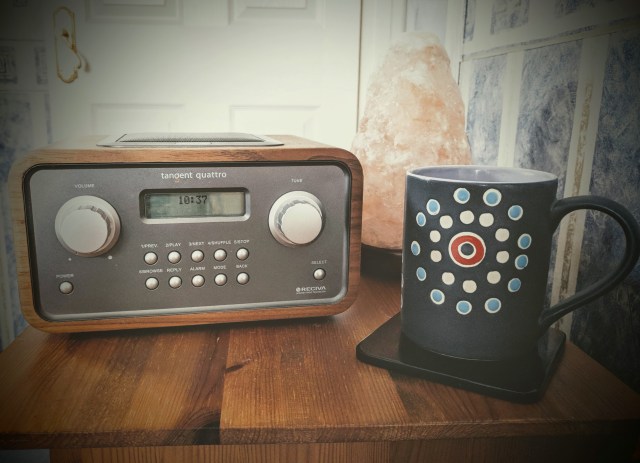
- I set my clock radio alarm for 20-30 minutes and take a nap until my alarm goes off (Sometimes listening to the radio while I nap).
- This is true rest. In my most exhausted moments, I am giving my body what it actually needs. I am, therefore, boosting my energy levels after my nap to do other things.
- Giving myself the permission to actually sleep (rather than moping on the sofa in front of the T.V. in a way that makes me feel more lethargic) is less time-consuming in the long run and actually makes me feel better and ready to get things done afterwards.
- What I Do If I am Not Tired But Need To Pause
- If I am not tired but feel I need a moment to pause and stop my head from spinning, I take a break for some “me time”.
- On those occasions, I might allow myself some guilt-free time in front of the television. For example, I might do this on the first day that I have some time to myself after my son goes back to school after a long school holiday.
- I set a specific time limit on how long I will spend watching.
- I choose what I watch very carefully to ensure it is something that is truly enjoyable, restful and worthwhile.
- During my viewing time, I make plans for how to productively spend my time after my restful viewing period is over.
- I make sure that when my self-imposed time limit is up, I return to my normal habits and routines as quickly as possible so as to avoid slipping back into any non-beneficial screen time habits.
- What I Do on “Normal” Days to Get Things Done (With the T.V. On)
- On other “normal” days when I plan to get on and get things done, I think very carefully before I decide to put the T.V. on at all.
- If I do decide to turn on the television, I make sensible choices about what I watch.
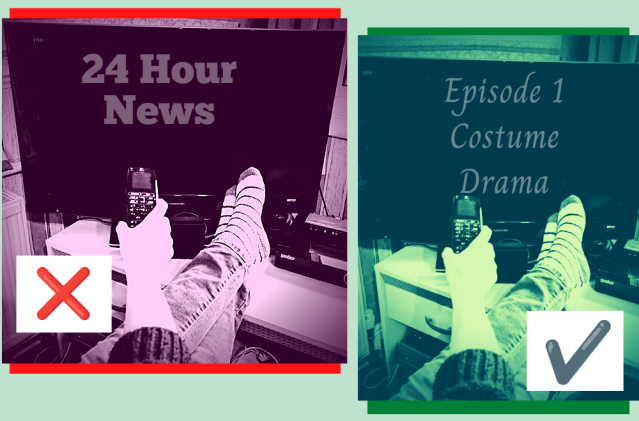
- I realised that the News and Discussion programmes I was previously choosing to watch were particularly destructive to my day.
- I realised these programmes (that go on for hours and last all morning!!) were too time-consuming and designed to draw you in to watch the whole show.
- I realised the content of these programmes was also having a negative impact on me. These shows were generally pointing out all the bad things happening in the world. They would often cast judgements on choices people make in their lives, such as: being a stay-at-home mum; being a working mum; how much screen time you should allow your children to have; how much exercise your child should take; what families should be eating and; what we should think about those who are at home and have time to watch daytime television at all!! I would get all caught up in these issues, often feeling judged, angry or wanting in my own life choices. This was detrimental to my self-esteem.
- I realised these programmes were distracting my energy towards issues out of my control and away from my own life, my own home and the tasks that I really wanted to be doing each day.
- I learned to watch other programmes instead.
- Now I watch specifically chosen favourite programmes on catch-up T.V. or I watch familiar DVDs that I can leave running in the lounge while I move about the house. If a programme is familiar or can be paused or rewound, it means that I can dip in and out of my viewing without worrying I am missing anything important or losing the plot. This frees me up to do jobs while I watch.
- I choose inspiring programmes that motivate me to get started on my household jobs. For example, I like costume dramas which show people living their lives in beautifully clean, tidy homes and wearing beautiful clothes. Such programmes display the kind of orderly home and peaceful life that I aspire to achieve for myself and my family. These programmes encourage and inspire me to get on with my washing and cleaning. These programmes, which often have beautiful classical music soundtracks, also create a peaceful, positive atmosphere in my home while I work.
- These specifically chosen programmes help me to feel more enthusiastic and energised as I go about my day.

- What I Do on “Normal” Days to Encourage Me To Switch the T.V. off + Get Things Done
- I soon realised that, on most days, I needed to switch the T.V. off completely and find alternative entertainment and company around the house.
- I do not want to feel tied to the lounge or to my screens. So, I have started listening to inspirational Podcasts and upbeat, energetic, happy music that I can sing-a-long to instead.
- I choose Podcasts that are aimed at mums and those who wish to create calm lives and homes for themselves and their families. The “Mother Like A Boss” Podcast, that I have referred to above, is one of my favourite Podcasts of this kind. These Podcasts inspire me to take action throughout my day.
- I can cast my Podcasts to my Google Home speaker to listen while I fold laundry or dust. I can play them directly through my phone’s speaker while preparing food in the kitchen or emptying the dishwasher. I can also put my earbuds in so that I can listen while I move freely around the house and even outside into the garden if I wish to do so.
- I choose music that gives me energy and brings back good memories for me. Singing along (or dancing along!!) with familiar and favourite songs is one of the very best ways I have found to make me smile, lift my mood and energise me to get jobs done.
- I Have Created Simple Routines
- When planning what to do around the house (instead of lounging in front of the television!) I have made sure that I keep my plans and household routines simple.
- I try not to be a perfectionist about it or set my expectations for my day too high.
- I only plan to do a few things each day.
- By planning my days in this way, I hope that my routines will be achievable each day, will not drain my energy too much and will therefore be sustainable for the foreseeable future.
- Instead of seeing housework as a race to the finish, I do not expect to get everything done each day. I see household tasks as an ongoing process which will always be a part of my life.
- By accepting that there will always be more to do around the house, I can stop after completing a few tasks without feeling guilty.
- Setting realistic expectations protects my wellbeing, helps me to feel calm while I work throughout the day and stops me from trying to do too much in any one day. This helps me to avoid experiencing periods of exhaustion and lessens the chance of me falling back into my old destructive screen time habits.
- I Plan Genuine Social Contact with Family and Friends
- Instead of relying on television and screens for social contact during my weekdays at home alone, I give myself permission to actually make proper plans to meet up with family and friends.
- I make plans to meet friends for coffee on a certain day.
- I invite family around to visit.
- Even if I am not meeting up with friends and family, instead of spending my time randomly scrolling social media, I take time to text, phone and keep in contact with my real-life friends, family and community.
- Having these plans and dates in my diary to look forward to motivates me to take positive action on jobs that need doing when I am at home alone at other times.

Having implemented these steps, I have started to make much better use of my days at home.
I am no longer using television and screens as an escape from reality or an excuse. I am now only watching my screens when I am truly enjoying them.
I feel less worried, anxious and guilty. I am less tired and I am achieving more of the tasks I wish to do. I can also be a calm mum to my son when he returns home from school each day.
In addition, I have rediscovered old hobbies (listening to the radio and listening to music) and discovered new ones (listening to Podcasts). This adds enjoyable variety to my days at home.
Finally and importantly, I now hope I am setting a much better example for my son about how to use screens and technology. I hope he will learn good habits from me and learn to put screens and technology in their rightful place. I hope he will use them as an enjoyable part of a calm, balanced, varied and happy life.
Thank you for taking the time to read this far!
I hope this overview of my own struggles with procrastinating in front of the television and the ideas I have shared to try and overcome those difficulties will provide some helpful reading to others who struggle with this too.
If you try some of my ideas, please let me know if any of them have a positive impact on your daily life.
I would also love to hear from you about any non-beneficial habits you may have fallen into and any excuses you might have made to justify those habits.
Perhaps there was a time in your life when you were particularly vulnerable to the power of television and screens. Maybe you have been trying to set a good example for your children in the use of screens and modern technology.
If so, it would be great for you to leave a comment about your experiences and any tips you may have for others.
I look forward to reading all of your responses in the comments.
In the meantime, I hope you have been inspired to “switch off your television set and . . . do something less boring instead”!!
Clare
*Please Note: This post was originally published in 2020. It was revised before being republished in August 2022
Recommended Resources
Books
“Happier” – Learn the Secrets to Daily Joy and Lasting Fulfillment, by Tal Ben-Shahar. Ph.D. (published by McGraw Hill Companies 2007)
I found this book extremely helpful reading when trying to analyse and gain an understanding of the reasons behind our attitudes and behaviours. If you would like to study this topic in more detail, I would wholeheartedly recommend this book. I found Chapter 2 particularly helpful.
“Collins Concise Dictionary English“, Third Edition, Harper Collins Publishers 1992 and online at collinsdictionary.com – consulted for all the word definitions detailed above.
Podcast
“Mother Like A Boss” Podcast. Episode 025 – “When Grace Becomes an Excuse”.
(The Podcast Episode details can be found at motherlikeaboss.com/podcastdirectory, under the “Mindest” Heading).
If you feel you need a pep talk in this area, I would highly recommend listening to this Podcast Episode.
Follow Me on Instagram
(You’ll find me @its_calmwithclare)
Click the Instagram link below to visit My Profile page and discover Posts, Reels and Stories about all things calm. I generally post each week on themes relating to the “Featured Post” on this blog*.
Follow Me on Pinterest
(You’ll find me @calmwithclare)
If you would like more inspiration and to explore a variety of resources about habits you may wish to click the link below and take a look at my Saved Pinterest Board “Calm & Good Habits”.
I would love for you to join me on Instagram and Pinterest.
*Please visit this blog’s About page for details of this week’s featured post.
Visit the About page now to design your reading plan for the blog


 Creating Calm with Clare
Must admit one of the most effective tools in helping son get over his dyslexia has been online time. Tended to go for the as much as he needs approach. But he doesn’t use it for hours. Short sharp bursts. He certainly doesn’t venture into the online chat areas. It’s mainly Youtube videos and online information sources. Very like you we both focus on doing the stuff we really want to and not fill the time with activities which are no more than background noise.
LikeLiked by 2 people
Yes. That’s exactly it. My son too likes to do lots of his learning online and he uses the technology regularly for learning, true enjoyment and entertainment. We just try not to get drawn into switching on our screens by default or as a reflex habit just because its there.
If we are enjoying our screen time and it is benefitting us as a family, we then feel we have got the balance right.
Obviously at the moment, with us all staying safe at home, our screen time is more than normal (as I’m sure everybody’s is!! ) but we try to use it for reliable information and entertainment that brings peace into the home rather than “background noise” or “information overload” that might drain our energy or panic us. It sounds like your son makes very good use if his screen time.
Thanks for reading, thanks very much for commenting and take care.
LikeLiked by 1 person
Nice blog
LikeLiked by 1 person
I really should quit screens. These things are just too dang addictive though. Tech: can’t live with it, can’t live without it.
LikeLiked by 1 person